
What warrants empathy?
The Psychology of Looking Away: Reflecting on Three Billboards Outside Ebbing

In the dead quiet of an Ebbing morning, three blood red billboards rise like accusations against the sky. Mildred Haye stands in front of them, cigarette in hand, talking to a journalist and daring the whole town to look away.
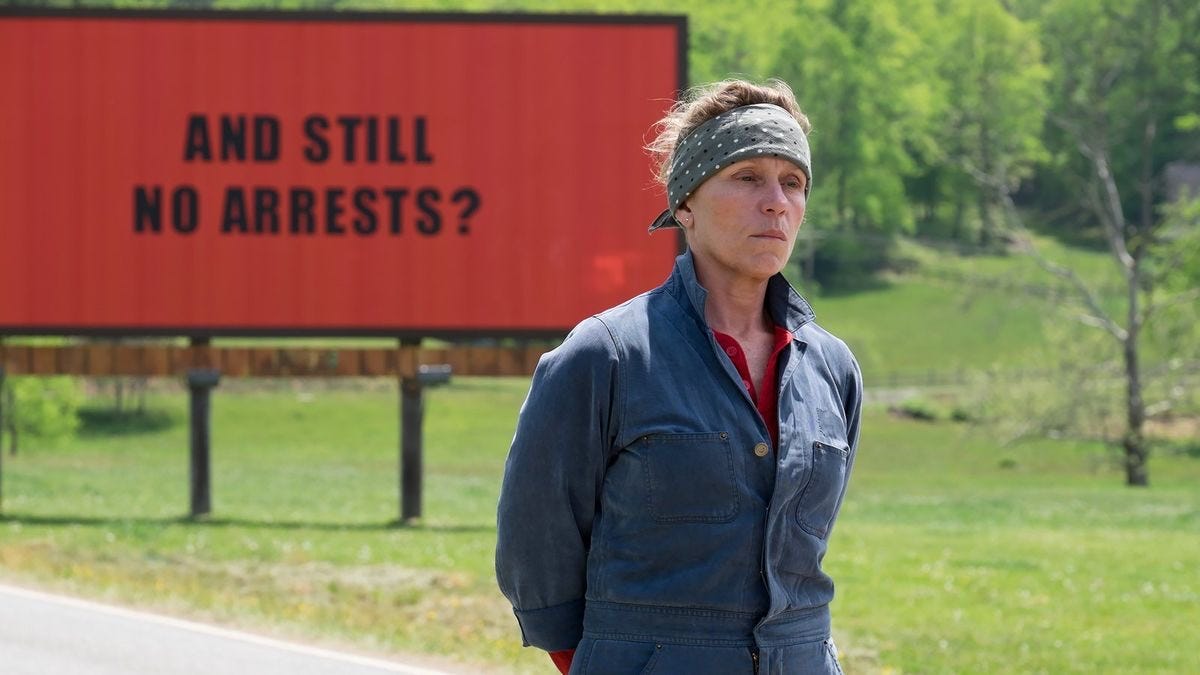
Seven months after her teenage daughter was raped and murdered, Mildred rents three billboards outside Ebbing, Missouri calling out the local police for failing to make an arrest. The town responds to this with outrage, rather than sympathy. Her son resents the attention. Her ex-husband mocks her. The police chief, dying of cancer, becomes a public shield for the department’s inaction.
As I watched this movie, I’m reminded of a particular kind of silence that follows this type of tragedy. The silence of people who know what happened but would rather keep the peace than face the wound head on. What struck me the most was how the town responded. Neighbors avoided eye contact, talked behind her back. The priest even came to give a stern warning. Even her son, worn thin by grief begged her to take the signs down. Instead of empathy, Mildred meets hostility.
Social psychologists would describe this as defensive attribution,
A cognitive bias where people distance themselves from victims of a tragedy to protect their “sense of safety”.
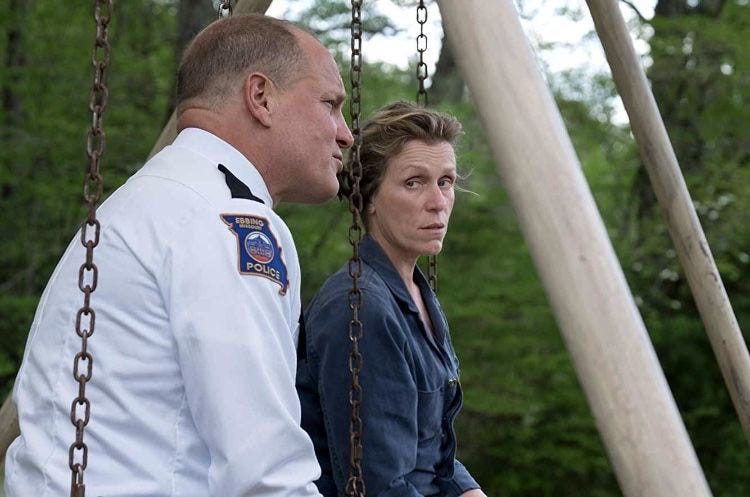
If they can convince themselves that Mildred is “too angry" (which we see the chief of police mention to her) then the tragedy feels like a consequence of her behavior rather than something that could happen to anyone at anytime. Her pain threatened the collective illusion of structure or order the town had, hence, punishing her for breaking their peace.
Even her son embodied a classic trauma response when he showed his irritation towards his mother. I couldn’t help but wonder what his relationship with his sister was like for him not to be engulfed by such grief and rage like his mother. The billboards triggered him to relive his sisters’ murder every time they drove by. I think him wanting them gone was his attempt to grasp normalcy and isn’t that what we do in smaller ways? Scroll through bad news, blame victims for reckless choices, say “if it was me, I would have done it otherwise”.
It’s comforting to believe pain is earned, because randomness is unbelievable.
I kept thinking about how easy it is to side with the town after all, Mildred wasn’t likable in the way movie mothers are- she always wore overalls, cussed loudly and was sometimes cruel to those around her. But she was the only one who didn’t let shame end the conversation on the death of her daughter.
Watching Mildred fight alone made me wonder how often I’ve stayed silent when someone’s grief felt heavy to touch, and I do agree, I was facing that defensive attribution, thinking such tragedy couldn’t happen to me or those I love. The movie posed as a mirror to me, fueling my introspection on situations where I selected who and what I gave my empathy to.
The film leaves the crime unsolved and it felt right.